A Fundraising Trek for dZi Foundation

dZi Foundation has been working in Nepal for 20+ years to ensure communities have tangible pathways towards shared prosperity. dZi works alongside communities across the Koshi River Basin, from the middle hills to the plains of the Terai, to increase access to critical infrastructure, reliable water systems, inclusive livelihoods, and climate resilience.

dZi has impacted over 61,000 people and aims to impact 33,000 more people in the next three years across six municipalities. Your fundraising directly supports dZi’s programs to empower and uplift marginalized households so future generations have the foundation to thrive.

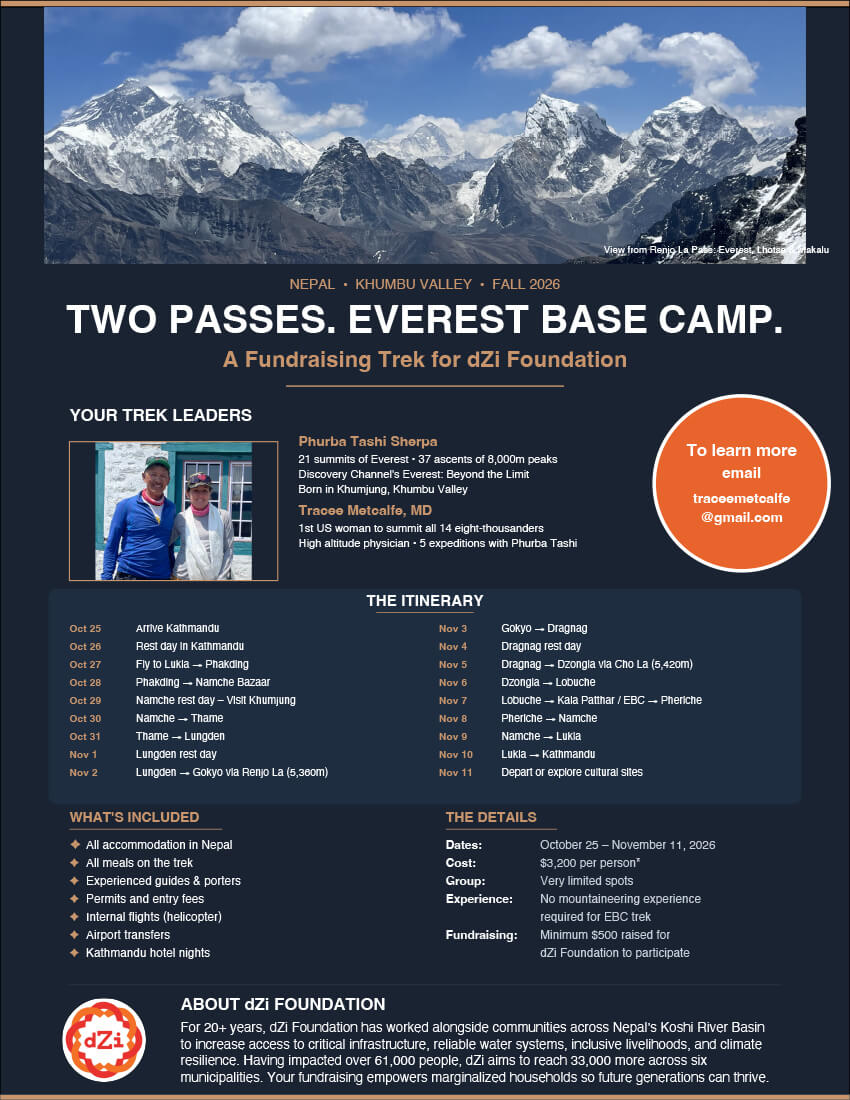
Two Passes. Everest Base Camp

A Fundraising Trek for dZi Foundation | Nepal · Khumbu Valley · Fall 2026

The Trek

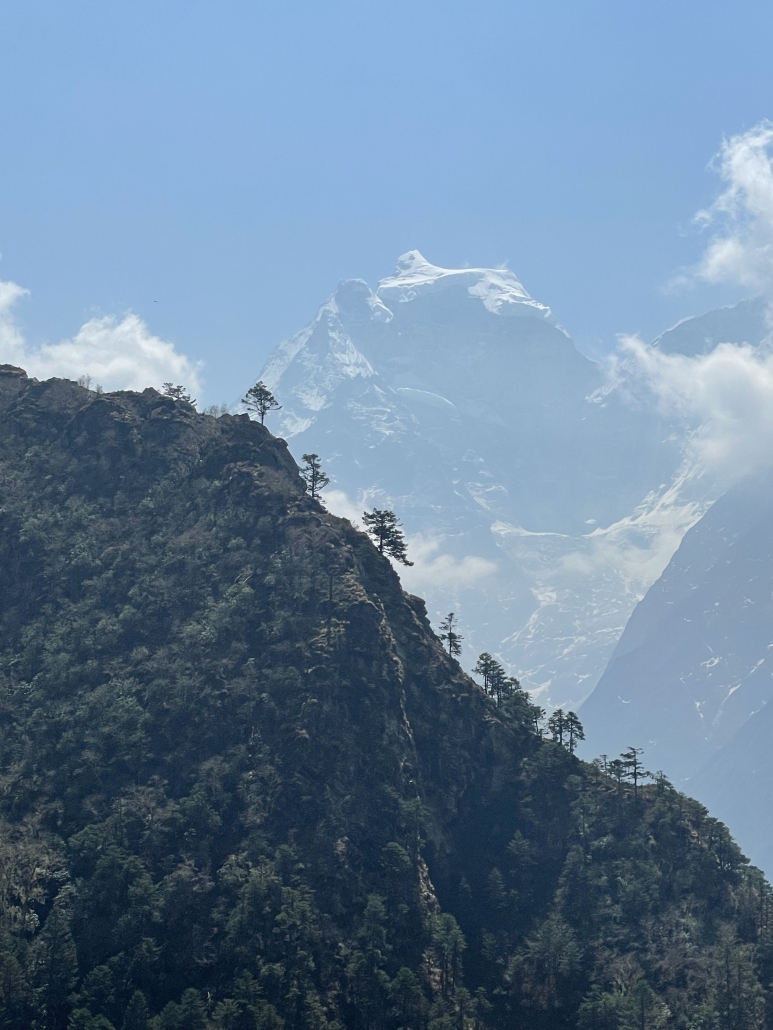
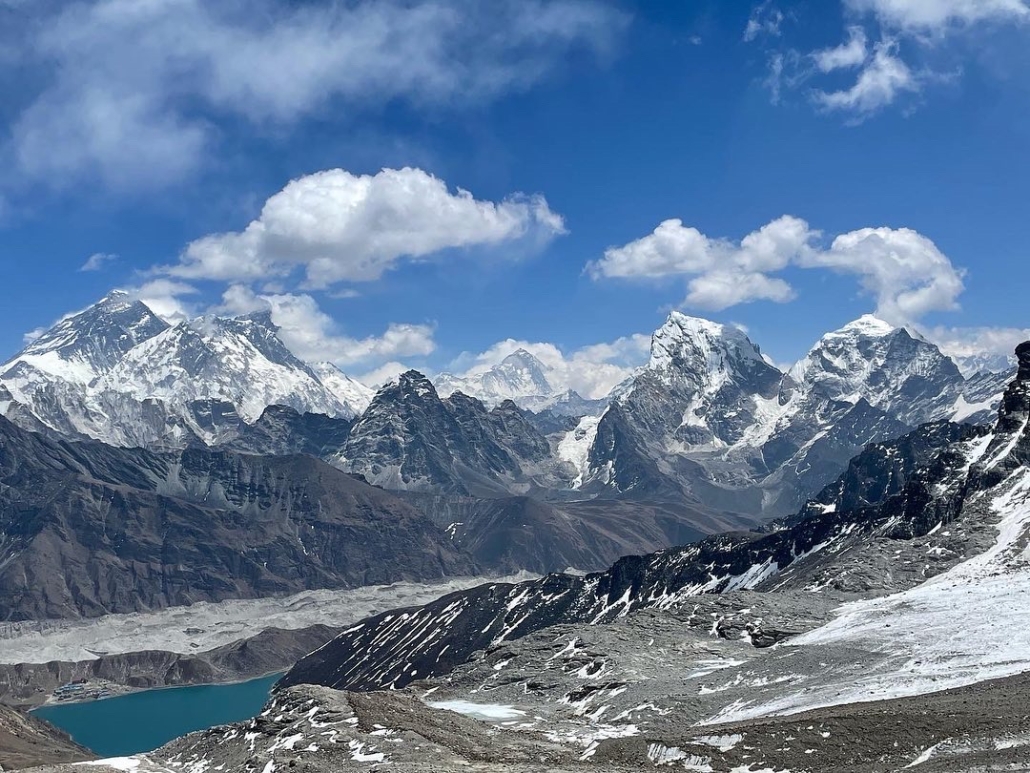
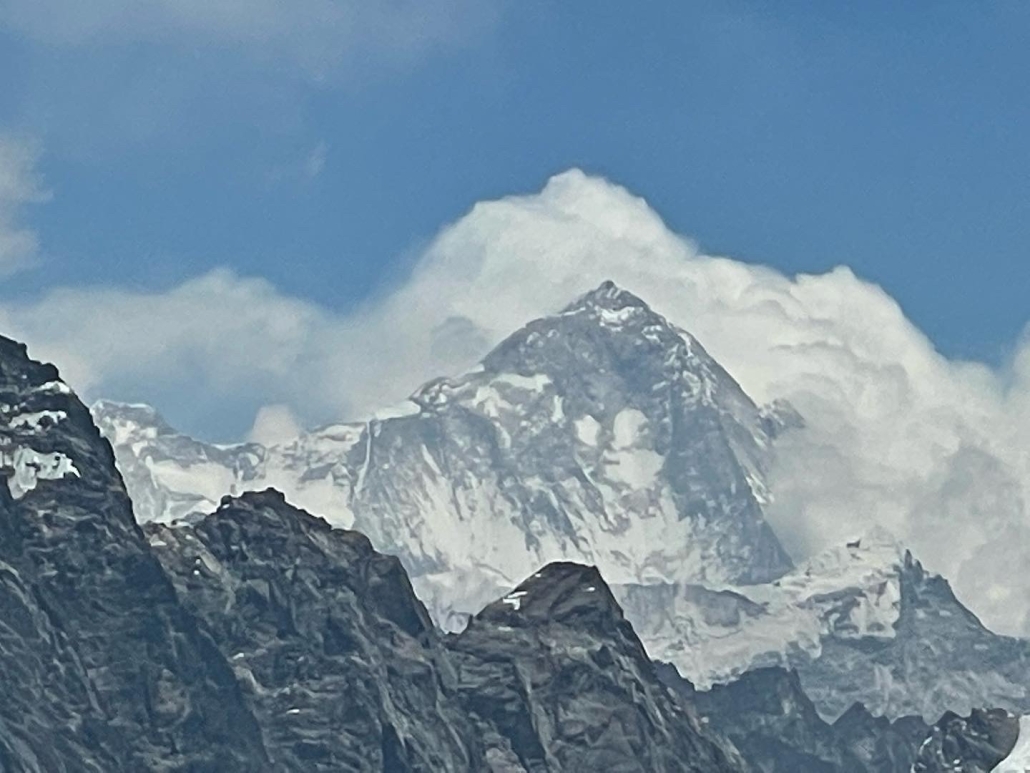
This isn’t the standard Everest Base Camp route. Over 18 days, you’ll cross two of the Khumbu’s most spectacular high passes — Renjo La (5,360m / 17,585 ft) and Cho La (5,420m / 17,782 ft) — before standing at the foot of the world’s highest mountain. The result is a loop through the full sweep of the Khumbu Valley: remote yak pastures, glacial lakes, legendary Sherpa villages, and unobstructed views of Everest, Lhotse, Makalu, and Cho Oyu from ridgelines few trekkers ever reach.

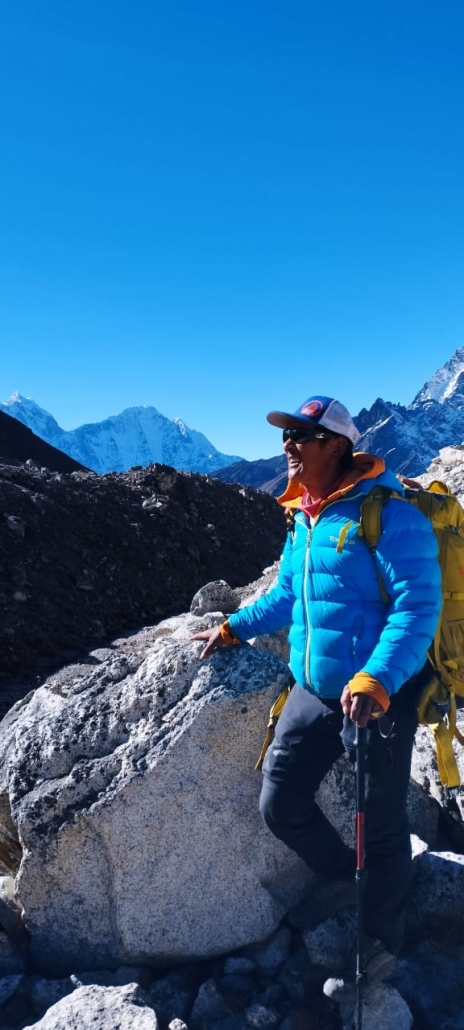
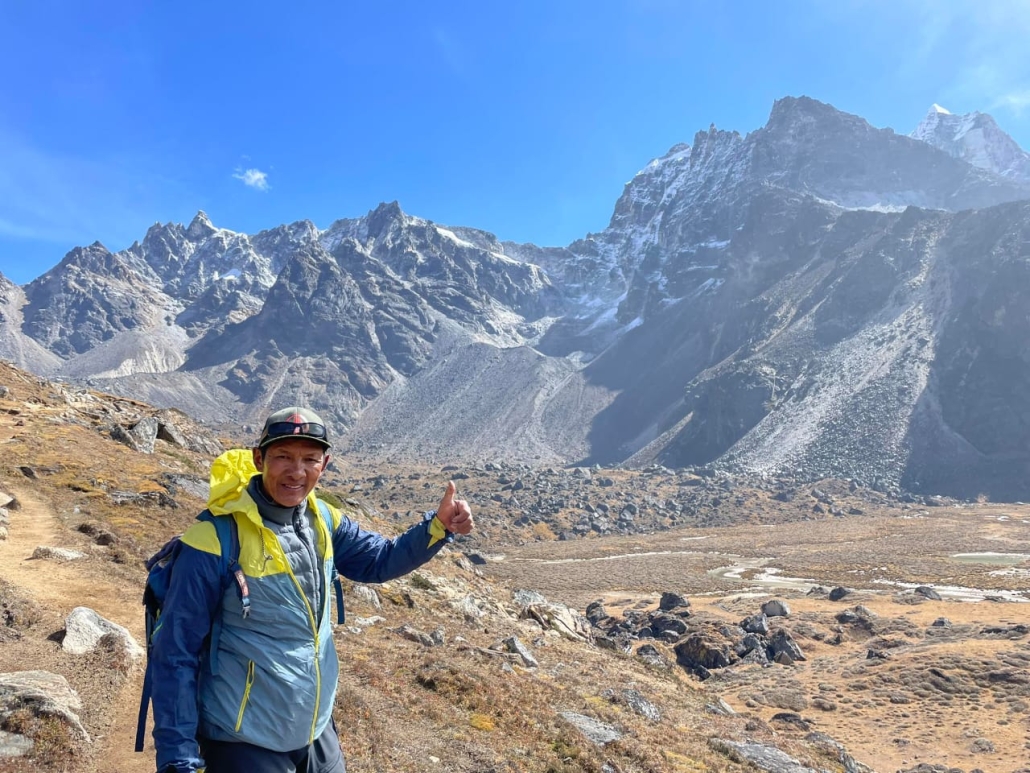
Leading the way is Phurba Tashi Sherpa — one of the most experienced mountain guides alive, with 21 Everest summits and 37 ascents of 8,000-meter peaks — alongside Tracee Metcalfe, MD, the first US woman to summit all 14 eight-thousanders. Tracee has summited the world’s highest peaks, but it’s the mountains and Sherpa people of Nepal that keep calling her back.

Why Two Passes?

Most trekkers reach Everest Base Camp by walking straight up the Khumbu Valley and back the same way. This trek does something different.

By crossing Renjo La on the way in and Cho La on the way out, you experience the Khumbu as a complete landscape — approaching from the west through the Thame Valley, pausing at the turquoise lakes of Gokyo, traversing the Ngozumpa Glacier, and descending toward Base Camp from the south. Each pass delivers a dramatically different panorama, and the route keeps you in high, wild terrain for the heart of the journey.

This circuit is considered one of the finest treks in Nepal. It demands good fitness and a willingness to embrace altitude, but it does not require any prior mountaineering experience.

The Route Day by Day

October 25 — Arrive Kathmandu (1,400m / 4,593 ft)
Your adventure begins in Nepal’s capital. Settle in, meet your fellow trekkers, and soak up the energy of this ancient city.

October 26 — Rest Day in Kathmandu (1,400m / 4,593 ft)
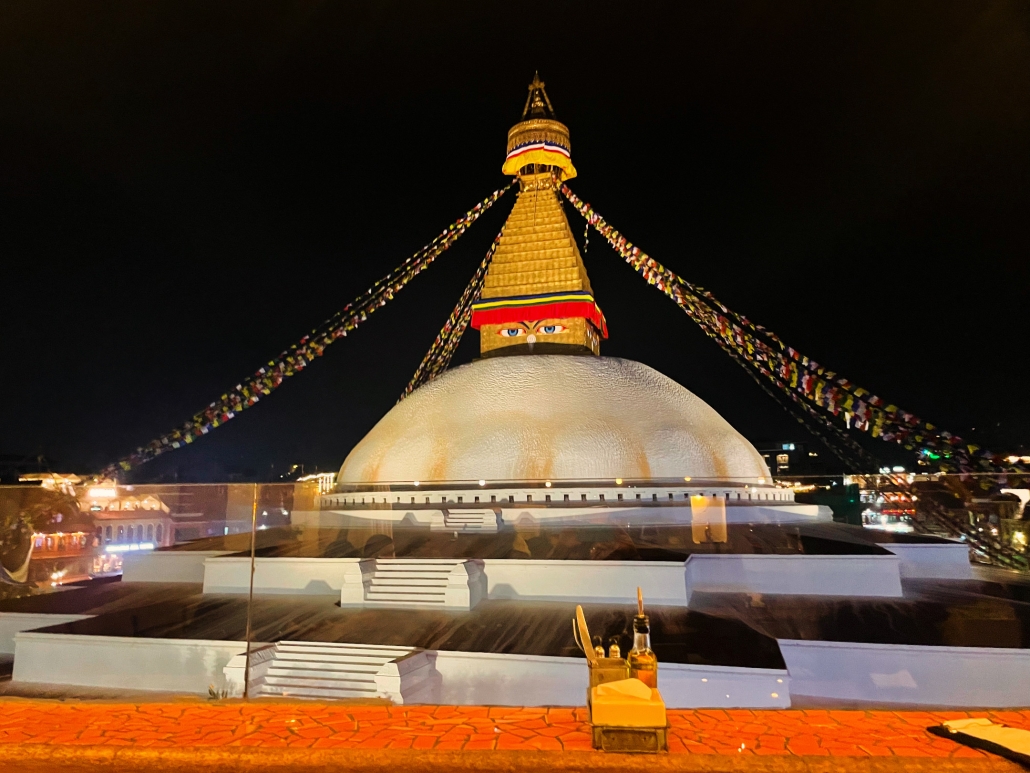
A full day to adjust to the time zone, explore Kathmandu’s UNESCO-listed temples and markets, and prepare gear for the trek ahead.

October 27 — Fly to Lukla → Phakding (2,610m / 8,563 ft)
~8 km / 5 mi · 3–4 hrs

A short mountain flight to Lukla’s legendary Tenzing-Hillary Airport kicks off the trek. You’ll descend gently through pine forests along the Dudh Koshi River to Phakding.

October 28 — Phakding → Namche Bazaar (3,440m / 11,286 ft)
~11 km / 6.8 mi · 5–7 hrs
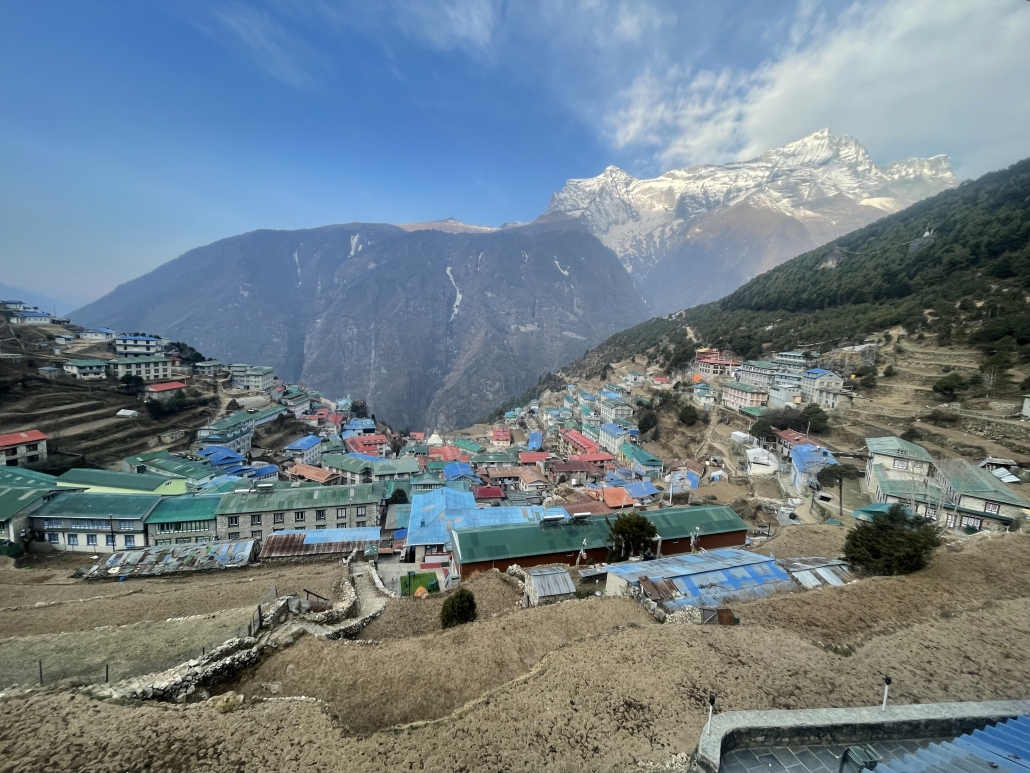
The trail rises through rhododendron forest, crosses dramatic suspension bridges draped in prayer flags, and climbs steeply to Namche — the Khumbu’s bustling hub and the Sherpa capitol of Nepal.

October 29 — Namche Rest Day · Visit Khumjung (3,790m / 12,434 ft)
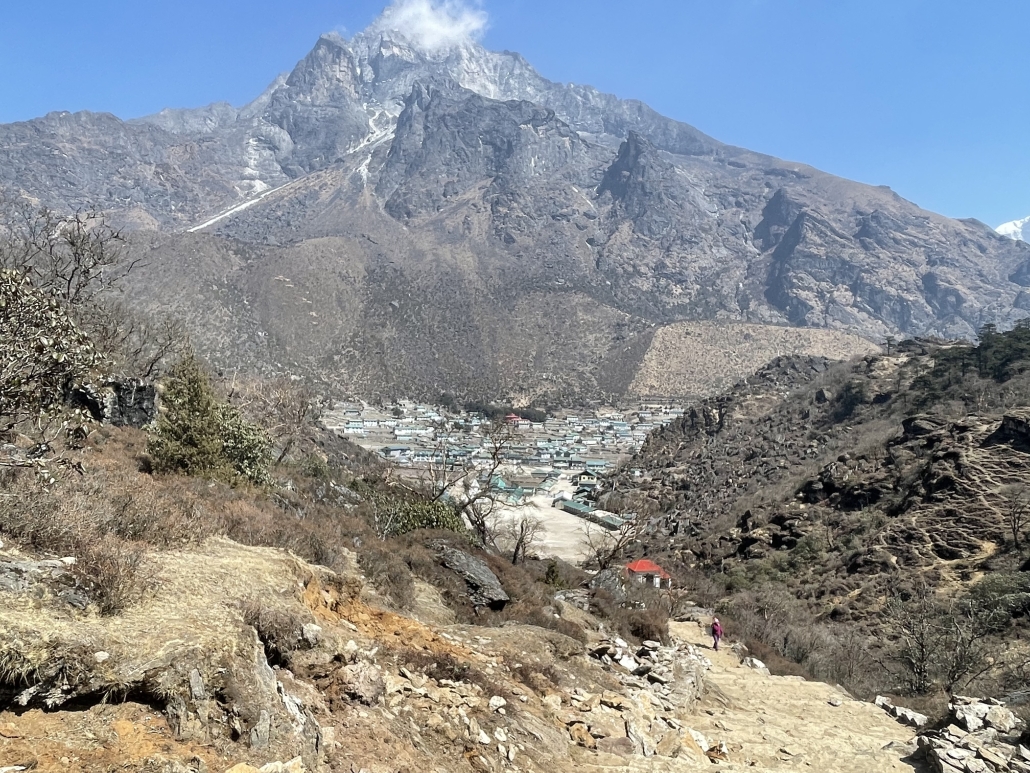
Acclimatization is not optional at altitude — it’s the secret to feeling strong on the passes ahead. Today you hike high and sleep low, visiting the historic village of Khumjung, birthplace of Phurba Tashi Sherpa, and home to one of Sir Edmund Hillary’s first schools.

October 30 — Namche → Thame (3,800m / 12,467 ft)
~8.5 km / 5.3 mi · 4–5 hrs
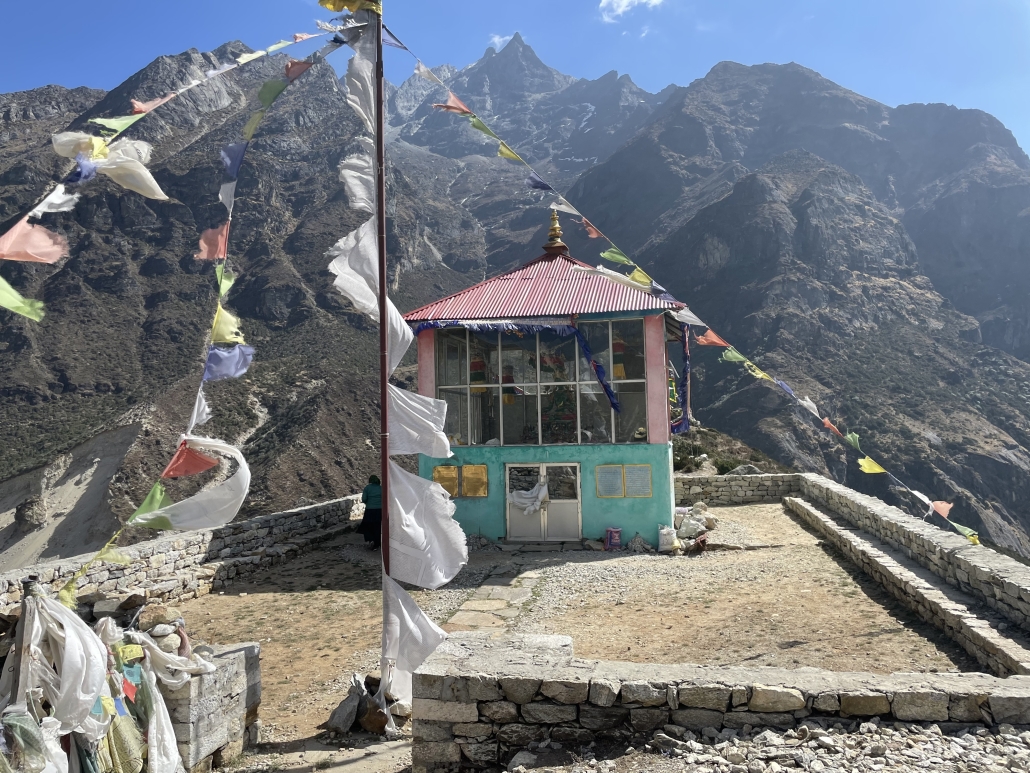
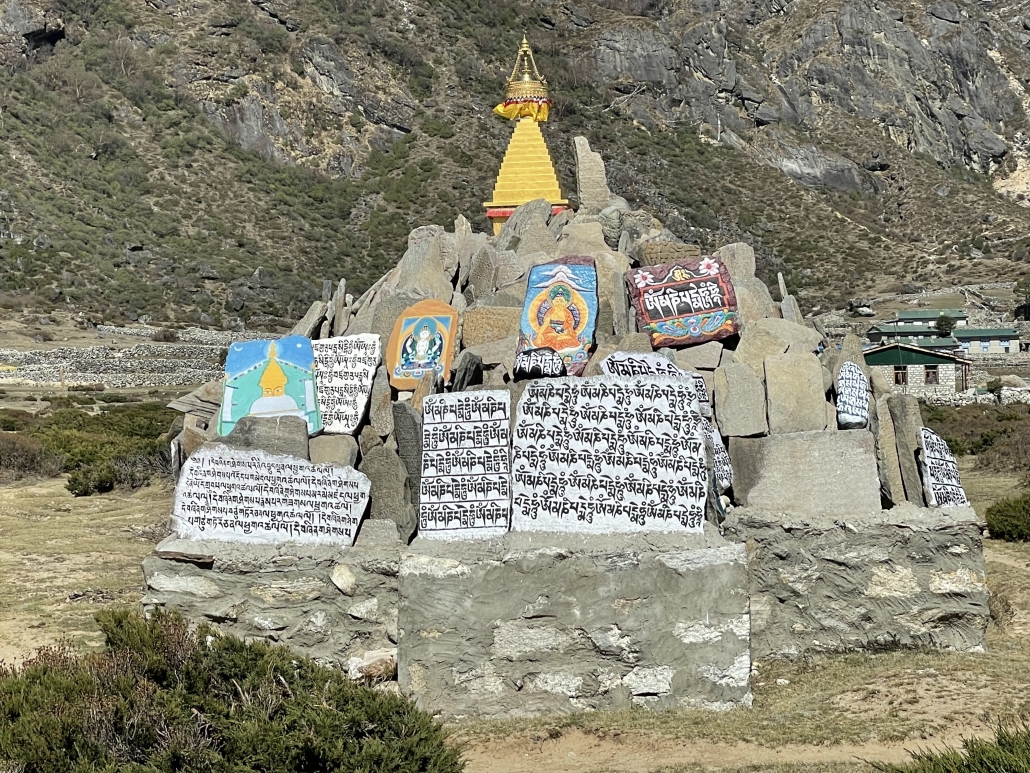
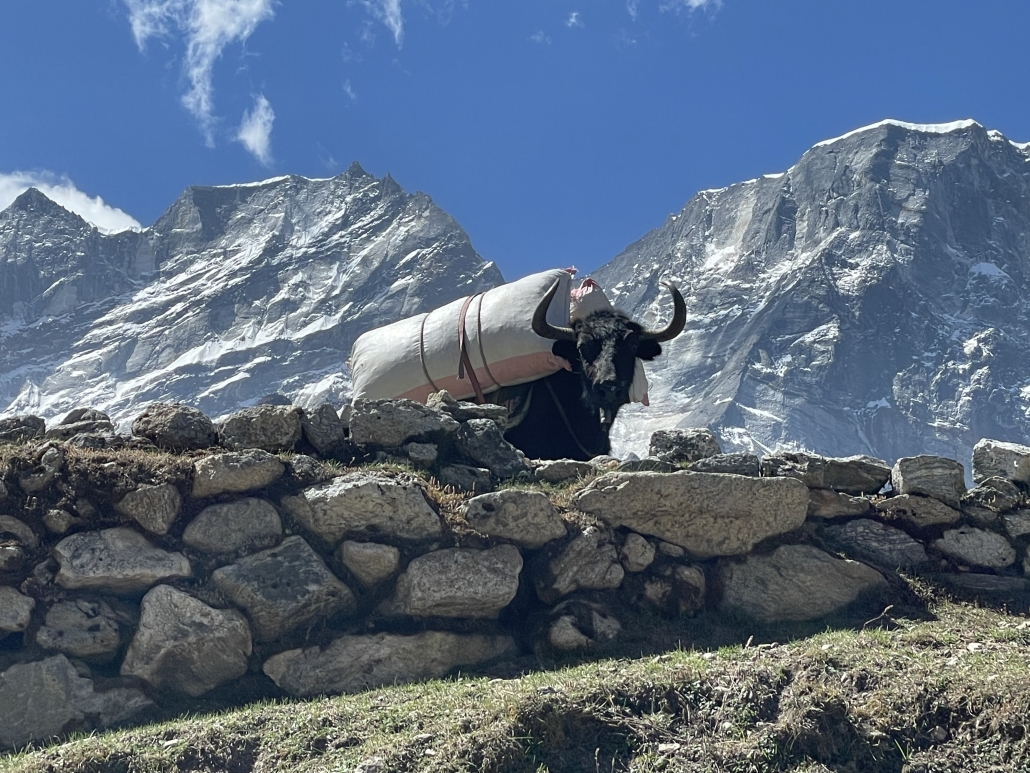
The trail turns west into the quieter Thame Valley, a traditional trade route to Tibet. Far fewer trekkers come this way. You’ll pass mani walls, ancient monasteries, and yak herders moving their animals to lower pastures for winter.

October 31 — Thame → Lungden (4,380m / 14,370 ft)
~8.6 km / 5.3 mi · 5–6 hrs
The valley narrows and the settlements thin out as you climb to Lungden, a remote cluster of stone buildings beneath massive peaks. The altitude is noticeable here; take it slow and drink plenty of water.

November 1 — Lungden Rest Day (4,380m / 14,370 ft)
A critical acclimatization day before the first big pass. Rest, explore the surroundings, and let your body build the red blood cells it needs.

November 2 — Lungden → Renjo La (5,360m / 17,585 ft) → Gokyo (4,750m / 15,584 ft)
~12 km / 7.5 mi · 7–8 hrs
The centerpiece of the first half of the trek. The climb to Renjo La is steady and rewarding — and the moment you crest the pass and see Everest, Lhotse, and Makalu framed against blue sky, you’ll understand why this route exists. The descent brings you to the shores of Gokyo’s sacred lakes, one of the most beautiful settings in the Himalaya.

November 3 — Gokyo → Dragnag (4,700m / 15,420 ft)
~6 km / 3.7 mi · 3–4 hrs
A shorter day crossing the moraine of the Ngozumpa Glacier, the longest glacier in Nepal. The landscape here is raw and lunar — a reminder that you’re walking through genuinely wild terrain.

November 4 — Dragnag Rest Day (4,700m / 15,420 ft)
Possible rest/weather day.

November 5 — Dragnag → Cho La (5,420m / 17,782 ft) → Dzongla (4,830m / 15,846 ft)
~9 km / 5.6 mi · 7–9 hrs

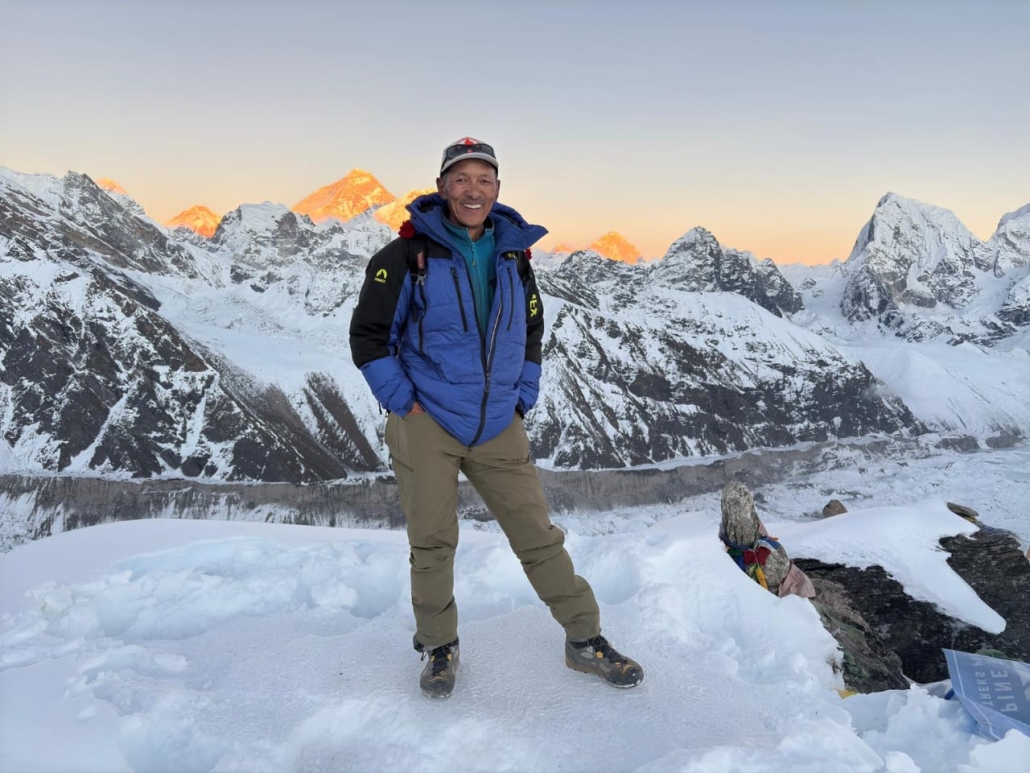
The second pass crossing — and the more technically interesting of the two. The final approach to Cho La involves a short section of glacier travel (your guides will manage this) before the trail descends steeply to the Khumbu’s main valley. You’ll arrive at Dzongla with Cholatse and Ama Dablam dominating the skyline.

November 6 — Dzongla → Lobuche (4,940m / 16,207 ft)
~7 km / 4.3 mi · 3–4 hrs
A beautiful ridgeline walk with commanding views of the Khumbu Glacier below. You’re now in the high Khumbu, and Everest is close.

November 7 — Lobuche → Kala Patthar (5,545m / 18,192 ft) / Everest Base Camp (5,364m / 17,598 ft) → Pheriche (4,280m / 14,042 ft)
~16 km / 10 mi total · 8–10 hrs
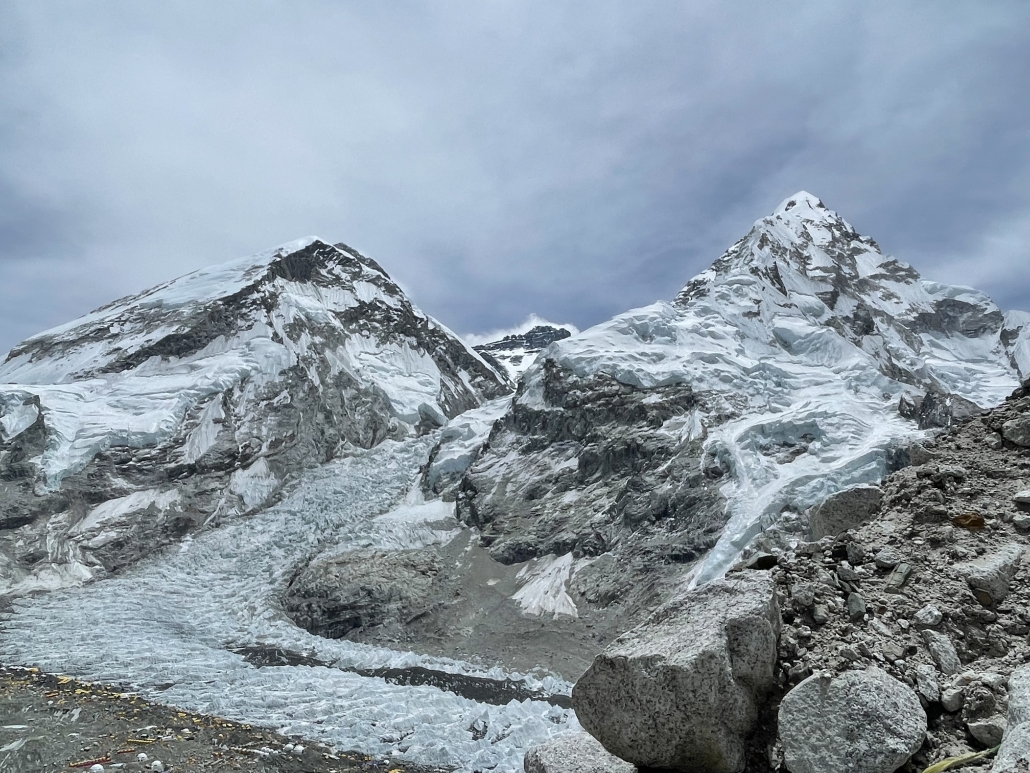
The culminating day. You’ll reach Everest Base Camp — the legendary staging ground for Everest expeditions — and climb Kala Patthar, the viewpoint that delivers the most dramatic close-up view of Everest available without a climbing permit. This is the highest point of the trek and a moment you will not forget.

November 8 — Pheriche → Namche (3,440m / 11,286 ft)
~15 km / 9.3 mi · 7–8 hrs
The long descent begins, the body loosening with every step downhill. By Namche, the altitude eases and appetites return with a vengeance.

November 9 — Namche → Lukla (2,840m / 9,318 ft)
~19 km / 11.8 mi · 6–7 hrs
The final full day of trekking retraces the famous Dudh Koshi corridor. You’ll arrive in Lukla with tired legs and full hearts.

November 10 — Lukla → Kathmandu (1,400m / 4,593 ft)
The mountain flight back to Kathmandu. Enjoy a team dinner and celebrate together.

November 11 — Meet the dZi Foundation Team
Your final day is an opportunity to connect with the people behind the mission. Meet with the dZi Foundation team to learn firsthand how your fundraising supports their work across Nepal’s Koshi River Basin — the water systems, infrastructure, and livelihood programs that are transforming lives in the communities they serve.

What’s Included

  • All accommodation in Nepal (tea houses on the trek, hotel in Kathmandu)
  • All meals during the trek
  • Experienced guides and porters
  • All permits and national park entry fees
  • Internal flights (fixed-wing)
  • Airport transfers
  • Kathmandu hotel nights
  • Alcohol and soft drinks are excluded.

The Details

Dates: October 25 – November 11, 2026
Cost: $3,200 per person
Group Size: Very limited spots
Experience Required:  None — no mountaineering background needed
Fundraising Requirement: Minimum $500 raised for dZi Foundation to participate

*Helicopter upgrade available at $3,900 per person.

Altitude & Acclimatization

The trek reaches a maximum elevation of approximately 5,545m (18,192 ft) at Kala Patthar. For most people, this is well within reach — but acclimatization must be taken seriously.

The itinerary is deliberately paced with rest days built in at Namche (3,440m), Lungden (4,380m), and Dragnag (4,700m) before each major pass. These layover days are not optional; they are the reason trekkers succeed on this route.

Common symptoms of Acute Mountain Sickness (AMS) — headache, fatigue, mild nausea — are normal at altitude and typically resolve with rest and hydration. Trek leader **Tracee Metcalfe, MD**, is a high-altitude physician who will provide medical guidance throughout the journey. The single most important rule: never ascend if you feel unwell. Your guides will always support that decision.

About Your Leaders

Phurba Tashi Sherpa has reached the summit of Everest 21 times and completed 37 ascents of 8,000-meter peaks — credentials unmatched by nearly any mountaineer alive. Born in Khumjung village in the Khumbu Valley, he knows this landscape with a depth that no guidebook can replicate. Phurba Tashi has been featured on Discovery Channel’s *Everest: Beyond the Limit* and is one of the most respected figures in high-altitude mountaineering.

Tracee Metcalfe, MD, is the first US woman to summit all 14 eight-thousanders — the world’s 14 mountains above 8,000 meters. A practicing high-altitude physician, she has worked alongside Phurba Tashi on five expeditions. Tracee brings both the experience of a world-class mountaineer and the expertise of a physician who has spent years studying how the human body responds to extreme altitude.

Together, they offer a level of leadership that is genuinely extraordinary.

About dZi Foundation

dZi Foundation has worked in Nepal for more than 20 years, partnering with communities across the Koshi River Basin — in the Solukhumbu, Khotang, and Bhojpur districts — to build critical infrastructure, reliable water systems, inclusive livelihoods, and climate resilience. Their programs have reached over 61,000 people, with a goal of serving 33,000 more across six municipalities.

Every trekker on this journey commits to raising a minimum of $500 for dZi. Those funds go directly to the communities dZi serves — empowering marginalized households so that the next generation in Nepal can thrive.

To learn more about dZi Foundation, visit dzifoundation.org.

Ready to Join Us?

Spots are very limited. To learn more or express interest, email traceemetcalfe@gmail.com

Tracee will work with you personally on the fundraising side — whether you’d prefer to set up a peer-to-peer fundraising page to rally your network, or simply make a direct donation to dZi yourself. Whatever approach works best for you, she’ll help you get there.

The guide for the trek

Phurba Tashi Sherpa

Phurba Tashi Sherpa is one of the most accomplished high-altitude mountaineers in Himalayan history. Born and raised in Khumjung, Nepal — just ten kilometers from Everest Base Camp — he grew up in a family of climbers and began his career as a porter and kitchen assistant before becoming one of the most trusted guides on the world’s highest peaks. He summited Mount Everest 21 times between 1999 and 2013, tying the world record at the time, and has accumulated an extraordinary 37 total summits of eight-thousanders across peaks including Everest, Cho Oyu, Manaslu, Shishapangma, and Lhotse — a record that stood until just a few years ago. Since retiring from eight-thousander expeditions, Phurba has continued to lead treks and climbs of other peaks throughout the Himalaya, bringing the same expertise and calm leadership that defined his high-altitude career. He served as head Sherpa for Himalayan Experience (Himex) under expedition leader Russell Brice and was featured prominently in the 2015 documentary Sherpa. Today he remains deeply rooted in the Khumbu Valley, where he continues to support climbers and trekkers through Mountain Experience while stewarding the mountains and communities he has called home his entire life.